
Crawl Space Rodent Control: How to Find, Seal and Clear Mice and Rats
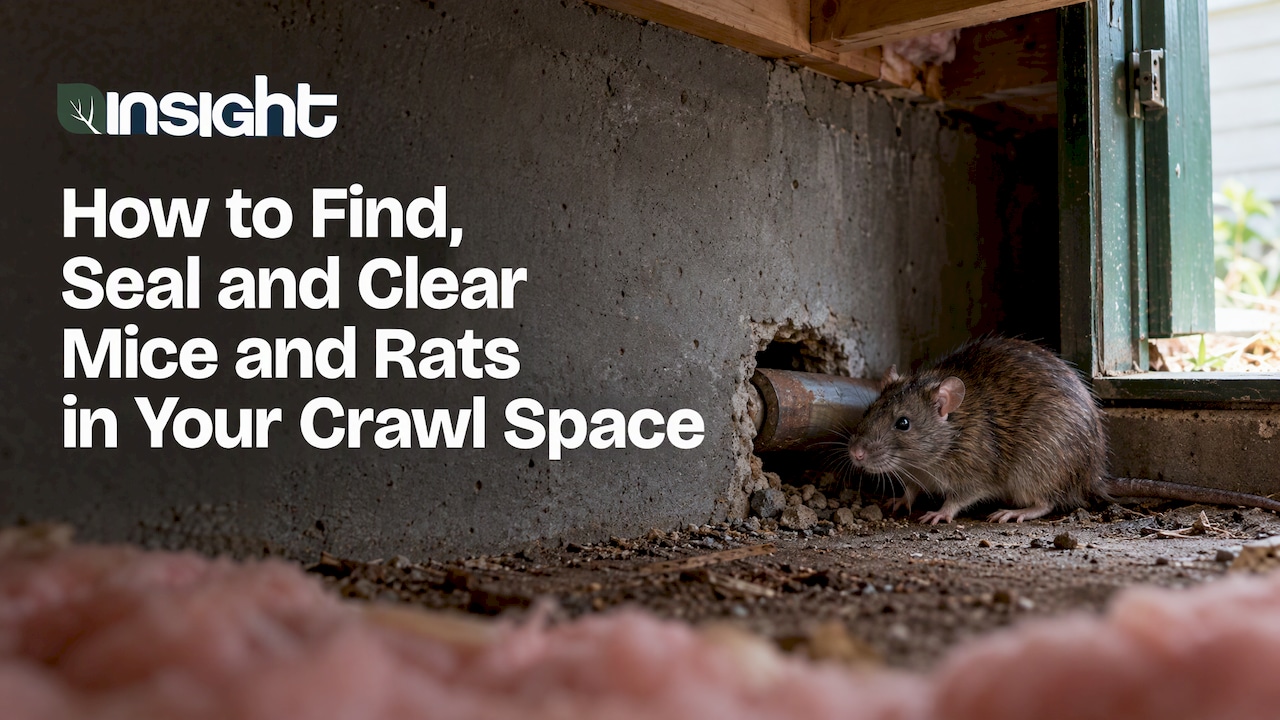
A crawl space is a near-perfect home for rodents: dark, undisturbed, close to pipes and insulation, and often damp. Getting rid of them takes three things done in order: find where they get in, remove the animals, then close every opening and fix the conditions that drew them. Trapping alone only empties the space for a while. Our certified technicians handle the inspection, the treatment and the follow-up visits, so the problem is solved at the source rather than repeated each fall. See our rodent control service.
TL;DR
- Mice can enter through gaps about the size of a dime and rats through a quarter-sized hole, so every small opening around pipes, vents and the foundation counts.
- Snap and electronic traps, set along walls, are the control method Health Canada and British Columbia point to. Baits should never be the only tool.
- Never sweep or vacuum droppings. Dampen them with a bleach solution, wear gloves and a mask, and bag everything.
- Keeping the space dry and clutter-free makes it less attractive, and an annual inspection catches problems early.
- A heavy or returning infestation is a job for a certified professional who inspects inside and out.
Table of Contents
- Signs of rodents in your crawl space
- Find the entry points
- Seal them properly
- Trap and remove them
- Clean up droppings and nests safely
- Make the crawl space less attractive
- When to call a professional
- How we handle crawl space rodent problems
- FAQ
- Sources
Signs of rodents in your crawl space
Start with what you can see from the access hatch. The Building America Solution Center lists droppings, disturbed or missing insulation, chewed wires, a damaged vapour barrier, wood damage and disturbed soil as signs of a pest problem. It also says not to enter areas with significant standing water: document what you see and consult a professional.
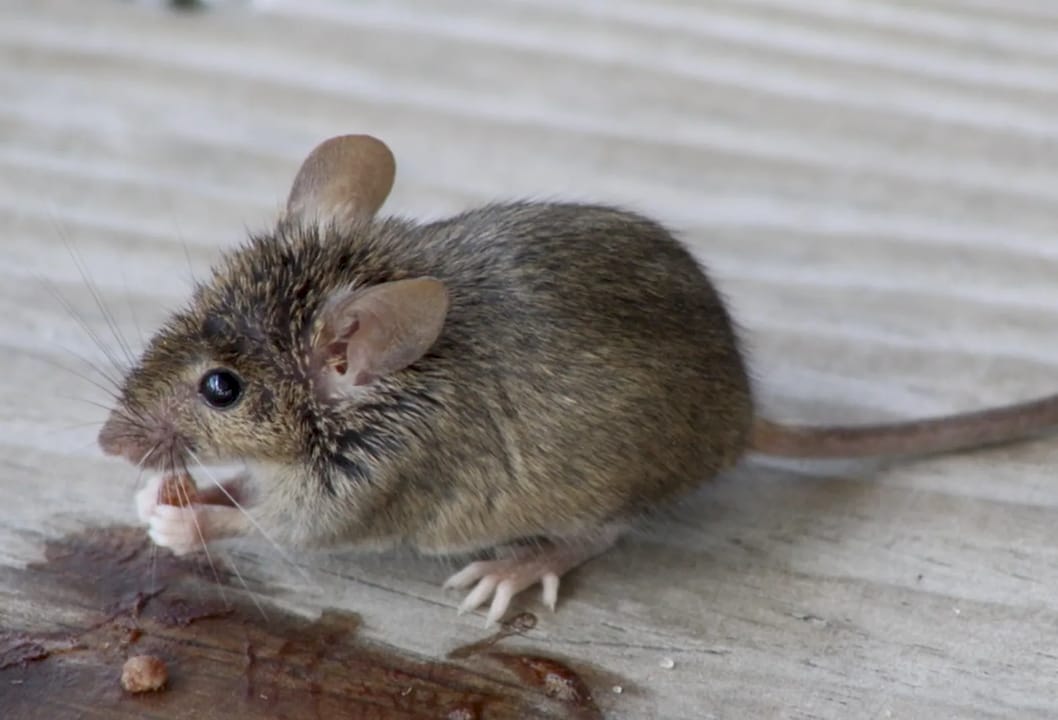
Droppings tell you more than you might expect. Cornell’s integrated pest management team notes that a mouse produces 50 to 60 droppings a day and a rat 40 to 50, and that large and very small droppings together can mean adults and juveniles are present. Fresh droppings after you clean mean your control measures are not working yet.
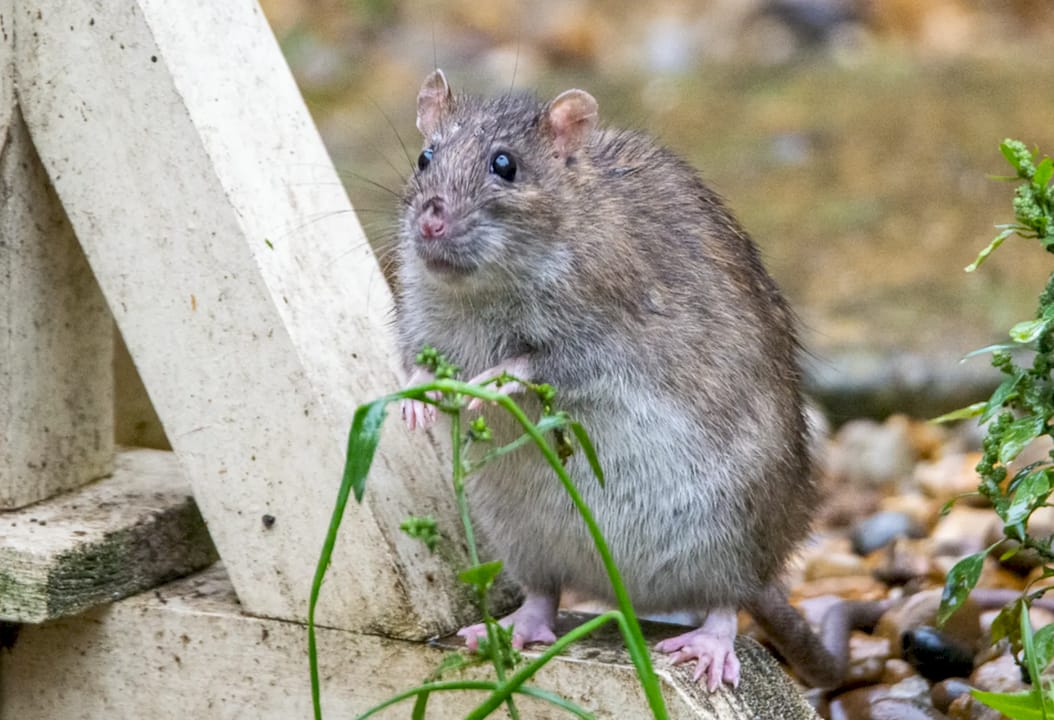
Identifying the species matters. NC State Extension stresses that proper diagnosis is the key to any rodent problem, because a house mouse lives indoors while other rodents enter from outside points such as high wire entries or tree branches. Health Canada adds that Norway rats prefer damp areas like crawl spaces and building perimeters.
Find the entry points
Entry points are the whole game. The sizes are smaller than most people assume:
| Rodent | Gap it can use | Source |
|---|---|---|
| Mouse | About 1 cm, smaller than a dime | Alberta Health Services |
| Rat | Roughly 1.25 cm (1/2 inch) | Ottawa Public Health |
The National Park Service rodent exclusion manual gives a practical trick: go in during daylight with the interior lights off, so any opening that lets in light from outside shows up.
The CDC lists the places to check in a crawl space: around floor drains, pipes leading to the water heater and furnace, floor air vents and dryer vents, and where the floor meets the wall. Add the foundation itself, the access door and any vent screens.
Most people miss spots that are hard to reach, partly hidden by insulation or only visible from the outside. This is where a professional inspection earns its keep. Our technicians check the property inside and out, and our crawl space home guide shows the moisture and pest trouble spots typical of this house type.
Seal them properly
The wrong material is the most common reason a sealed hole reopens.
- Small holes around pipes: stuff with steel wool, then caulk over it. NC State says only 00-sized steel wool deters rodents, it must be caulked over, and expanding foam is not recommended because mice chew through it.
- Vents: cover with fine metal mesh. British Columbia’s guidance recommends 1/4-inch wire mesh and sealing every opening larger than 6 mm (1/4 inch).
- Foundation cracks and larger gaps: Ottawa Public Health suggests mortar or cement over metal lath, and rodent-resistant metal door sweeps on doors.
- Access door: it should close tightly, with screened vents or 1/4-inch hardware cloth over openings, per NC State.
Seal only after the rodents are out. Closing the openings with animals still inside traps them in the space, where they die or chew new routes out. That is why sequence matters: trap, confirm activity has stopped, then seal.
Trap and remove them
Health Canada recommends snap and electronic traps. Place most traps at right angles to the wall with the baited end closest to the wall, about one per metre, or five to ten near a visible mouse hole. Leave baited traps unset for three to four days so the animals get used to them, check daily once set, and reset in two to three weeks to catch maturing rodents.
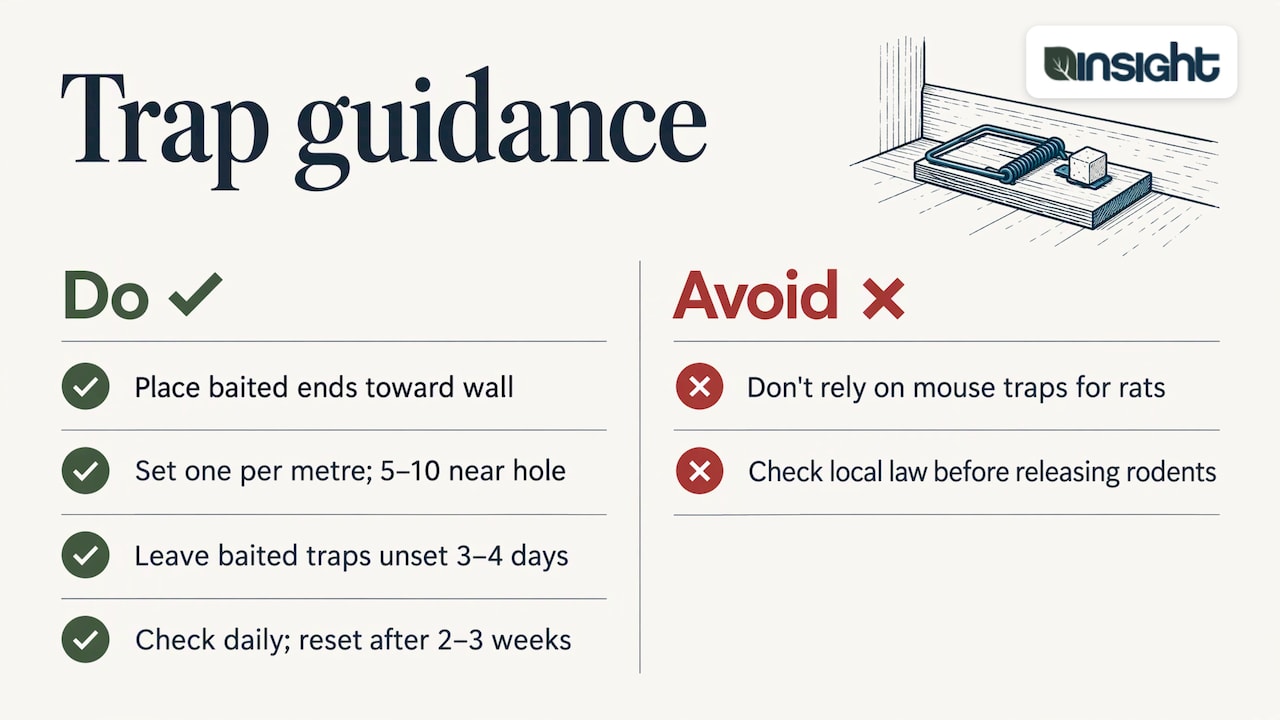
Two cautions. NC State warns that mouse snap traps are generally not effective for rats, which need a rat-sized trap. And in some areas it is illegal to release captured rodents on someone else’s property.
Why poison is not the first move
British Columbia’s Ministry of Environment calls rodenticides a last resort because pets, children and wildlife can die from eating bait, and predators such as hawks and owls can be poisoned by eating contaminated rodents. Health Canada says anticoagulant baits sold to the public are highly toxic and must be used in tamper-proof bait stations in areas children and pets can reach.
The rules are also tightening. In a 2026 petition response, the Minister of Health confirmed that domestic-class products must be solid blocks used in bait stations, that domestic-class second-generation anticoagulants are prohibited, and that a re-evaluation of eight rodenticides is under way. Commercial-class rodenticides may be used only by certified pest-control operators, farmers and people authorized in government-approved programs, and the bait stations must lock and carry required labelling. For a household with children or pets, that is a strong reason to let a certified operator work in the crawl space. For more on lower-risk home care around families and pets, see this guide to safer cleaning for your family and pets.
Clean up droppings and nests safely
Rodent droppings can carry disease, and dry sweeping puts tiny particles in the air. The steps from Alberta Health Services and the CDC agree:
- Air out the area for 30 minutes before you start.
- Wear rubber gloves, goggles and a well-fitting filter mask (N95 or better).
- Never sweep or vacuum droppings.
- Soak droppings and nests with disinfectant or a bleach solution of about 1 part bleach to 10 parts water (1.5 cups per gallon) and let it sit about five minutes.
- Wipe up with paper towels, then double-bag everything, dead rodents included, for the outdoor garbage.
For heavy infestations the CDC recommends coveralls, boots or shoe covers, and a half-mask respirator with a HEPA filter, and says contaminated exposed insulation should be bagged for removal. Durham Region Health adds that heavy infestations call for a licensed pest control operator. Crawl spaces are tight, awkward and hard to ventilate, so a large cleanup is not a casual weekend job.
Make the crawl space less attractive
Once the rodents are gone, remove the reasons they came.
- Moisture: Health Canada recommends keeping indoor relative humidity between 30% and 50%, using a dehumidifier where needed. Fix leaks and drainage first.
- Storage: keep items off the ground and away from walls, as Ottawa Public Health advises.
- Food: store anything edible in glass or metal. Alberta Health Services notes mice chew through plastic.
- Vegetation: British Columbia advises keeping 15 to 20 cm (6 to 8 inches) above ground clear of bushes against the building.
Encapsulation, which lines the floor and walls with a heavy plastic vapour barrier and seals the vents, is sometimes done alongside pest work. One Ontario contractor sets its sequence as pest inspection, a trap-out cycle of two to four weeks, exclusion, then encapsulation. Its 2026 Toronto price tiers run from $3,500 to $20,000 or more depending on the scope. Whatever the plan, rodents must be dealt with before anything is sealed in.
An annual look helps. The Building America Solution Center suggests inspecting the crawl space at least once a year, ideally in spring or fall after a significant rain.
When to call a professional
Call when you see droppings in several spots, hear activity again after trapping, find gnawed wiring, or cannot find where they are getting in. Alberta Health Services says a certified professional should do a full inside-and-outside inspection, may need several visits over days or weeks, and should be told if you have children or pets. Mice move indoors in fall and winter, so late autumn is a common time for calls.
How we handle crawl space rodent problems
Our residential service starts with a property inspection and pest identification, followed by treatment of the interior and exterior, including foundation and crack-and-crevice work. Our certified technicians customize each treatment with household and pet safety in mind, and we hold QualityPro Accreditation, which reflects our hiring practices, technician training and commitment to safety. Unlimited follow-up service calls are part of our service, and our Quarterly Protection plan adds preventive visits through the year.

To request a quote by phone or online, start with our rodent control page or see all our pest services. For ongoing prevention, ask about Quarterly Protection.
FAQ
How do I seal a crawl space from mice?
Stuff gaps around pipes with 00-grade steel wool and caulk over it, cover vents with 1/4-inch hardware cloth or metal mesh, and fill foundation cracks with mortar or cement. Avoid expanding foam, which mice chew through. Seal only once the mice are out.
Can mice get through a crawl space vent?
Yes, if the screen is damaged or the mesh is too wide. Mice can pass through gaps about the size of a dime, so vents need fine metal mesh fixed securely.
Is it safe to clean mouse droppings myself?
For a small area, yes, with precautions: ventilate for 30 minutes, wear gloves, goggles and an N95 mask, dampen with a 1:10 bleach solution, wipe with paper towels and bag the waste. Never sweep or vacuum. Heavy contamination needs a respirator and is better handled by a professional.
How long does crawl space rodent control take?
That depends on the size of the infestation. Trapping cycles are commonly checked daily and reset after two to three weeks, and Alberta Health Services notes a professional may need several visits over days or weeks.
Sources
- Rats and mice, Health Canada
- Rat Control, Ottawa Public Health
- The House Mouse, Alberta Health Services
- How to Seal Up to Prevent Rodents, CDC
- How to Clean Up After Rodents, CDC
- Rodent Exclusion Manual, National Park Service
- Common structure-invading mice, NC State Extension
- Managing Mice and Rats, Cornell CALS
- Look at Crawlspace for Moisture Issues, Building America Solution Center
- Guide to addressing moisture and mould indoors, Health Canada
- Commercial class rodenticides bait station requirements, Health Canada
- Petition e-7000, House of Commons
- Crawl Space Encapsulation Toronto guide