Type to search pests or houses...
Mus musculus
Sexual maturity at 6 weeks. Gestation 19-21 days. 5-10 litters/year with 5-6 young each.
Omnivorous but prefer grains and seeds. 'Nibblers' by nature—visit 20-30 food sites per night, consuming only 0.1g per visit. This explains why baits sometimes fail when competing food sources are present. Need only 3ml water daily—can survive on food moisture alone.
Build nests in micro-environments near heat sources—behind refrigerators, inside oven insulation, near water heaters. Nests are constructed from 'soft' human materials: shredded fiberglass insulation, yarn, paper, or fabric, formed into a ball about 10-15cm in diameter. Always within 3-10m of a food source.
Small dark pellets (3-6mm), pointed at ends. 50-80 per mouse per day.
Small tooth marks on food packaging, wood, wires, plastic.
Dark greasy smears along walls and baseboards from body oils.
Nocturnal activity in walls, ceilings, under floors.
Found in all provinces wherever humans live. Primarily indoor pest.
Active year-round indoors. Peak indoor movement occurs during first frost (September-October in most of Canada) as mice seek thermal refuge. This 'fall pressure' is the most common time for new infestations.
This pest is commonly found in these home types

Grade-level entry points around entire perimeter. Attached garages provide sheltered access.
View house details →
Crawlspace provides protected harborage. Multiple entry points through foundation vents.
View house details →
Lower level partially below grade creates entry opportunities. Utility areas attract nesting.
View house details →
Shared walls allow mice to travel between units. Difficult to control without coordinated effort.
View house details →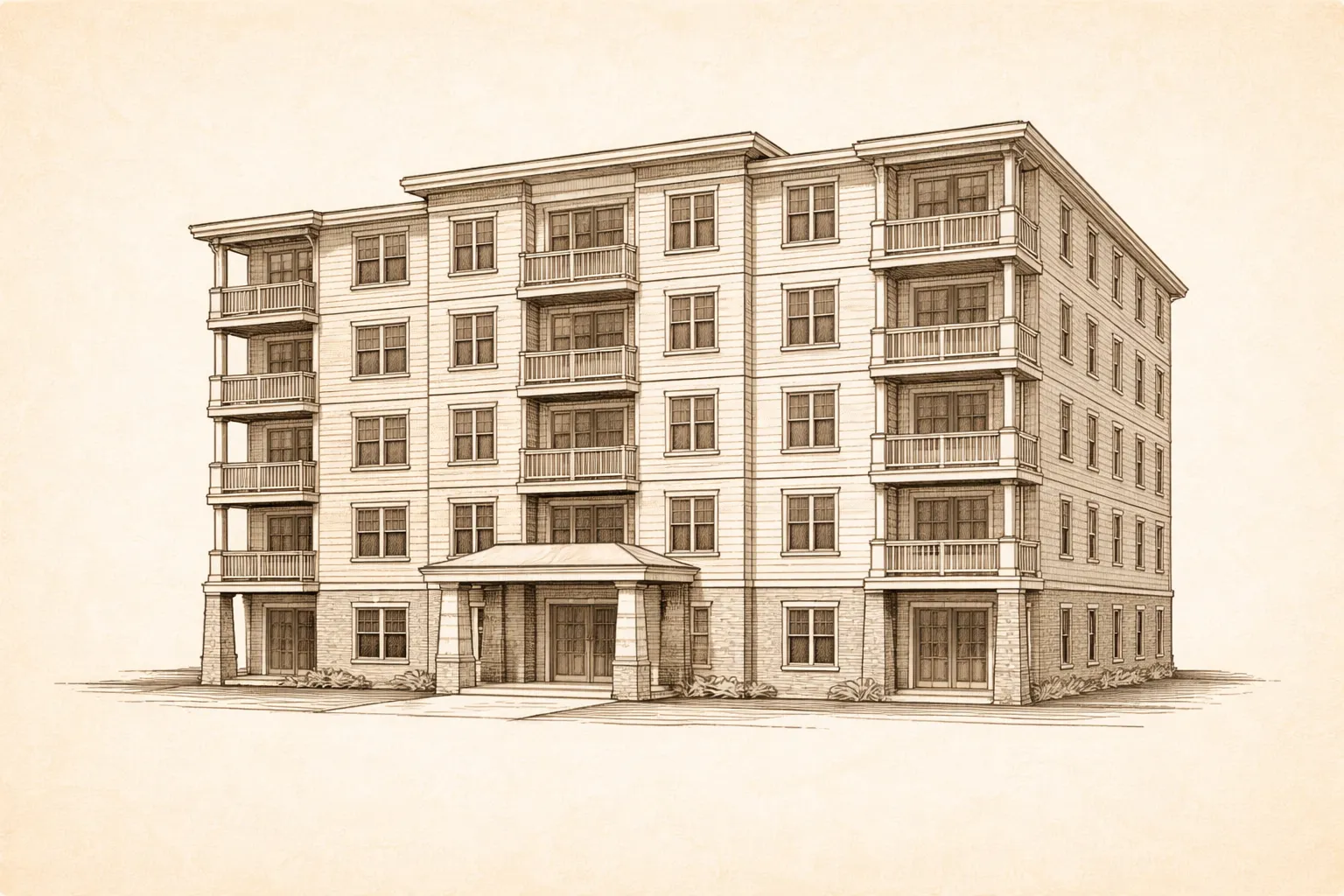
Utility chases and shared walls create pathways. Building-wide populations common.
View house details →Integrated approach using tamper-resistant bait stations, snap traps, and exclusion. Follow-up visits essential—mice reproduce rapidly.
Get Rodent Control Service
