
Quarterly Pest Control: How It Works and What to Expect
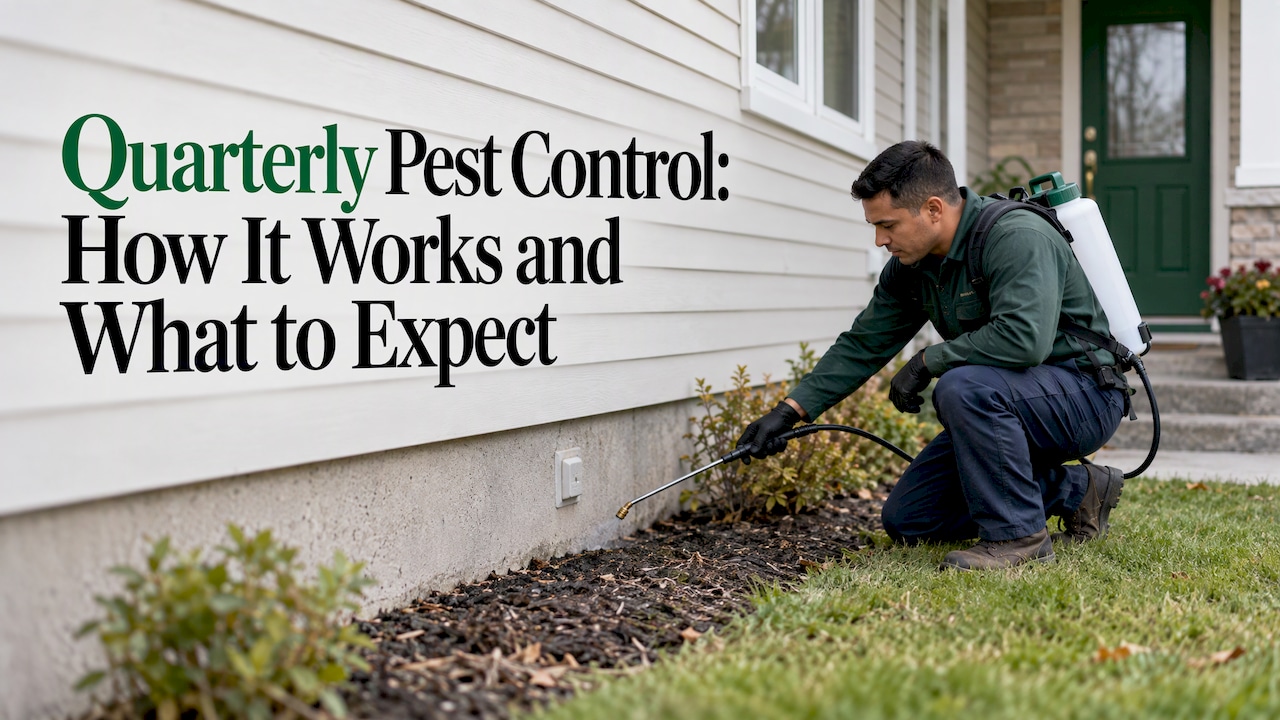
Quarterly pest control means a licensed technician visits your home four times a year, roughly once per season, to inspect, treat and head off problems before they become infestations. For most Canadian homeowners it is the most practical way to stay ahead of ants, spiders, wasps and rodents, because each season pushes different pests toward your house. Our Quarterly Protection plan is built on that rhythm, with certified technicians, treatments tailored to your household and unlimited follow-up service calls.
TL;DR
-
Quarterly pest control is four scheduled visits a year, each timed to the season’s main pests, rather than a single treatment after you spot a problem.
-
Each visit combines inspection, interior and exterior treatment and advice on what to fix around the house, so small entry points get dealt with early.
-
Your part between visits matters: sealing gaps, removing food and water access and keeping moisture away from the foundation.
-
Families and pet owners follow clear rules on leaving the area, drying times and covering food. Health Canada publishes them.
-
Pricing depends on your home and pests, so the way to get a number is to request a quote by phone or online.
Table of Contents
What a quarterly schedule actually means
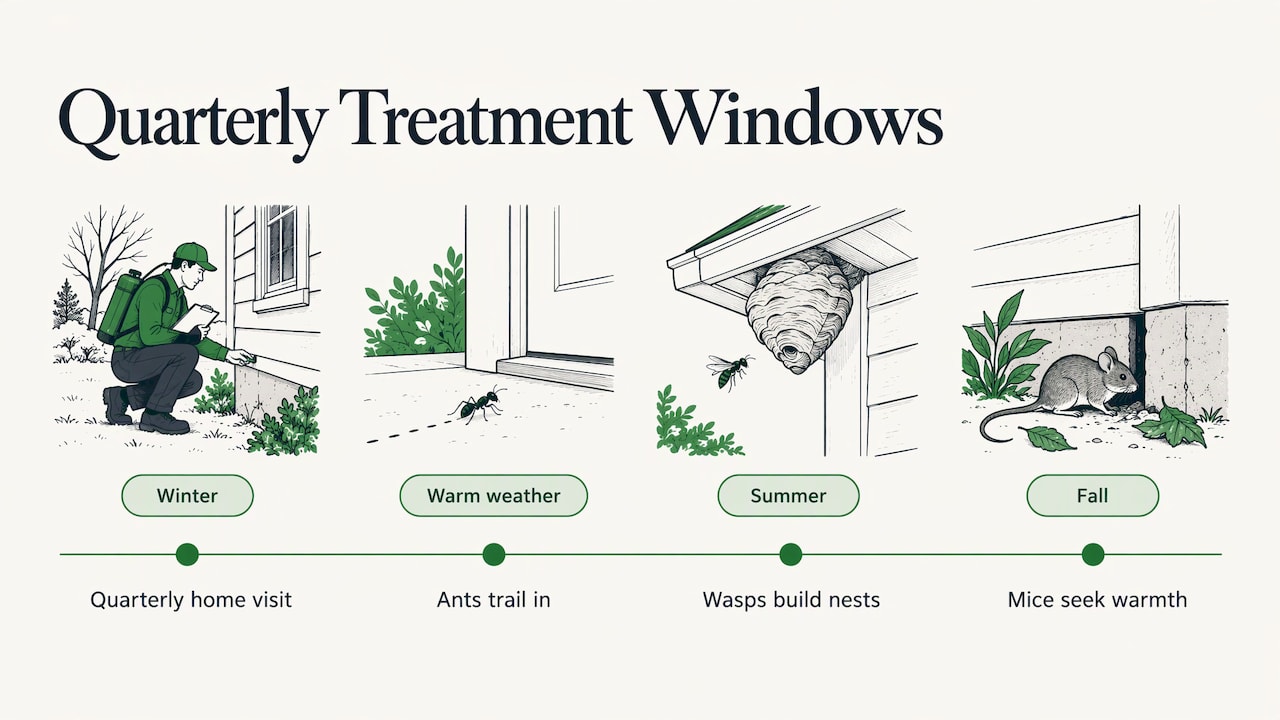
A quarterly schedule splits the year into four treatment windows, about three months apart. The first visit starts with a property inspection: the technician identifies which pests are active or likely, finds where they get in, and treats accordingly. Later visits are shorter. They check what has changed, refresh the barrier and respond to whatever the season is bringing.
The logic is simple. A single spray does not last all year, and pests do not arrive all at once. Ants trail in when the weather warms, wasps build nests in summer, and mice look for warmth as temperatures drop. Visiting every season means someone is looking at your home at each of those moments, not after the damage is done.
It also changes how you deal with a pest you notice. Between visits, a quarterly plan with unlimited follow-up calls means a sighting is a phone call, not a new purchase decision.
How the four visits follow the Canadian year
The exact pest mix depends on your region, house and yard. A seasonal calendar for Ontario gives a useful picture of how pressure shifts: mice and rats dominate winter, carpenter ants and spiders arrive in spring, wasps and mosquitoes in summer, and rodents and stink bugs return in fall. Other provinces shift the timing by a few weeks, but the pattern holds.
| Season | Typical focus | What the visit usually aims at |
|---|---|---|
| Winter (Jan to Mar) | Mice and rats already inside or nesting near the foundation | Inspect entry points, check utility openings, follow up on rodent activity |
| Spring (Apr to May) | Carpenter ants, spiders | Exterior and foundation treatment, moisture checks, crack-and-crevice work |
| Summer (Jun to Aug) | Wasps, mosquitoes, ants | Wasp nest and spider web removal, yard-side treatment |
| Fall (Sep to Nov) | Mice, rats and other pests looking for shelter | Seal-up advice, perimeter treatment before the cold sets in |
The fall visit is the one many homeowners underestimate. Rodents need only small gaps to get in, and acting before the first hard frost is far easier than dealing with mice in a wall in January.
If you have searched for a specific quarterly schedule, the honest answer is that the calendar is flexible. A technician sets your visit months around your region’s weather, your property and what the inspection finds.
What each visit covers
Our services cover property inspections, pest identification, interior and exterior treatments, and foundation and crack-and-crevice treatments. They are available for ants, spiders, beetles, rodents, mosquitoes, moths, wasps and ticks. A typical visit puts those pieces together:
-
Inspection. The technician walks the exterior and interior, looking at the foundation, door and window frames, eaves, garage, basement and wherever you have noticed activity.
-
Identification. Treatment depends on the species. Carpenter ants, for example, are tied to moisture and wood, so a spray alone is not the answer, while a wasp nest needs removal.
-
Treatment. Interior and exterior treatment, including foundation and crack-and-crevice work where pests travel and hide.
-
Removal. Wasp nests and spider webs are removed as part of the service.
-
Advice. The technician tells you what to fix: a gap by a pipe, damp soil against the foundation, a pile of firewood against the wall.
Technician quality matters in this routine because the technician decides what to treat and where. We hold QualityPro accreditation, which reflects how we hire, how we train technicians and our commitment to safety.
What you do between visits
Treatments work best when your home gives pests less reason to stay. The BC Ministry of Agriculture’s household pest guide lists pest-proofing measures that are worth turning into a seasonal checklist:
-
Fit weather stripping and door sweeps, and repair window and door screens.
-
Seal cracks and crevices in walls, and caulk openings around pipes and conduits.
-
Repair roof leaks and eliminate standing water.
-
Use lidded trash cans.
-
Keep a mulch-free band of 2 to 3 feet around the foundation.
-
Stack wood piles off the ground and away from the house.
Ants respond especially well to kitchen habits. The City of Ottawa’s pest plan, which relays Government of Canada advice, says removing access to food and water is the easiest way to avoid ant problems. Store ant-attractive foods in sealed glass jars or snap-tight containers, keep counters clean, sweep or vacuum around pet dishes and rinse containers before they go in the garbage. Standing a pet food dish in a shallow dish of water keeps ants out, since they cannot swim.
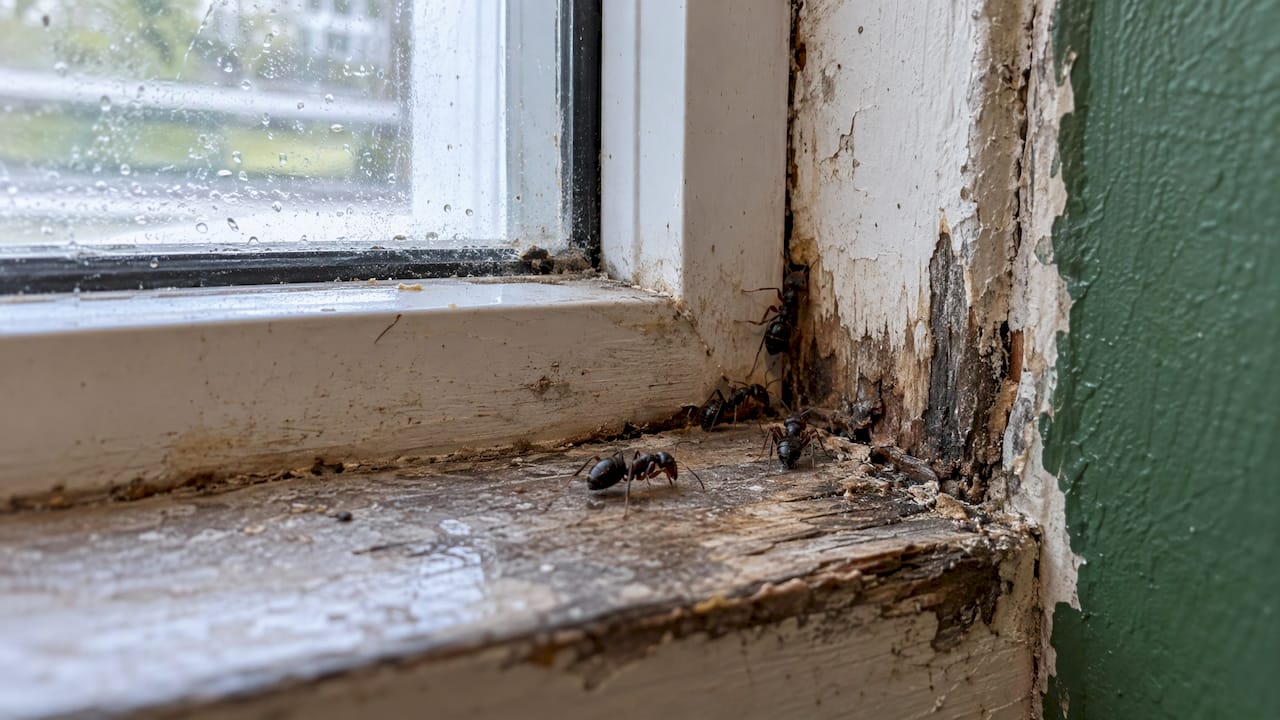
For carpenter ants, the BC guide notes that the problem generally resolves once the moisture problem is fixed, and that an ant nest inside the home has to be destroyed before the problem is solved. That is a good example of why a technician’s inspection and your own fixes work together.
If you see signs of rodents between visits, call right away. Ottawa’s plan lists scratching in walls, gnawing, damaged food packaging, droppings and burrows around foundation walls as signs, and notes that sealing exterior cracks prevents re-entry. With our unlimited follow-up calls, that call is part of the plan.
Protecting children, pets and the rest of the household
Safe treatment is the main reason families choose professional service, and the rules are specific. Health Canada’s guidance on using pesticides safely says:
-
People and pets should leave the area during treatment, especially children, pregnant women and elderly people, and return only after the product has fully dried.
-
Indoors, cover or remove food, dishes, utensils, aquariums and pet food dishes, and open doors and windows for airflow. After drying, wash food-contact surfaces with hot soapy water.
-
Outdoors, stay out of the treated area for at least 12 hours unless the label says longer.
-
Outdoor spraying should not happen in wind over 8 km/h, above 30°C or in rain, and products must be applied at the label rate.
Health Canada’s guidance for building occupants adds that people should be told the treatment plan in advance, including what to do before and after, and given the name and registration number of the pesticide used. The same page says any pesticide used in a building must be registered by Health Canada, which you can identify by the registration number on the label, and that only professional pest control specialists may use commercial-class products.
Behind those labels is a regulatory process. The Pest Management Regulatory Agency registers a product only after a science-based assessment, with risk assessments that focus on vulnerable groups such as children, pregnant people and seniors. Re-entry intervals and protective equipment requirements come out of that work. The agency also reviews products already on the market: in 2023 to 2024, 11 of its 19 re-evaluation decisions required label changes to increase protection, such as changed re-entry intervals or added buffer zones.
Our positioning is household and pet safety: certified technicians, customized treatments and responsible product use. When you book, tell the technician who lives in the home, including infants, pets, aquariums and anyone pregnant or elderly, so the visit can be planned around them.
Pests that need more than the seasonal rhythm
Quarterly visits are about prevention and control. Some situations call for a faster or more intensive response:
-
Active rodent signs. Do not wait for the next scheduled visit. Call as soon as you see droppings, gnaw marks or hear scratching.
-
Wasp nests near doors, decks or play areas. Nests grow through summer and should be removed, not just watched.
-
Bed bugs. The BC guide says bed bug problems require persistence and early intervention, and that follow-up visits by a pest control operator are often necessary. If you suspect them, contact your local health department or a certified operator promptly.
-
Multi-unit buildings. If you rent or live in a condo, your building’s pest plan applies. In Montréal, for example, the municipal housing office says bed bug and cockroach treatments usually need several visits two or three weeks apart, and that preparation by residents makes the work effective.
Health Canada’s landlord guidance says that prevention remains the best approach to pest management in a building. That is what a quarterly schedule is: prevention with a technician on hand when something slips through.
What quarterly pest control costs
Cost depends on your home’s size, the pests involved, how much exterior and foundation work is needed and whether there is active activity. We do not publish a flat price for Quarterly Protection because it is set for your property. To get a number, request a quote by phone or online, and describe what you have seen, where and how long ago. The quote is the reliable figure, because an average from a general price guide will not reflect a detached house with a wooded lot versus a townhouse.
Quarterly Protection from Insight
If you want the seasonal schedule handled for you, our Quarterly Protection plan covers year-round preventive visits, with unlimited follow-up service calls if pests appear between them. Our certified technicians customize each treatment to your household and pets. We serve homeowners across Canada, including Calgary, Edmonton, Kitchener, Mississauga, Montréal and Halifax; you can see the full list on our locations page.
If you have a specific problem now, such as ants, rodents or wasps, start with a quote request and say so. Treatment for the immediate problem and the ongoing plan can be set up together.
FAQ
How often is quarterly pest control done?
Four times a year, about every three months, with each visit timed to the pests of that season. If pests appear between visits, our plan includes unlimited follow-up service calls.
Is quarterly pest control safe for kids and pets?
Yes, when it is done to the label and the household follows the re-entry rules. Health Canada says people and pets, especially children, pregnant women and elderly people, should leave during treatment and return only once the product has dried. Tell your technician about everyone in the home so the visit is planned around them.
Do I need quarterly service all year, including winter?
Winter visits are worthwhile because mice and rats are most active indoors in the cold months, entering through foundation gaps and utility openings. The inspection also catches the entry points to fix before spring.
What should I do before each visit?
Cover or remove food, dishes and pet food bowls, clear access to the baseboards and the foundation, and keep children and pets away until the product has dried. Afterwards, wash food-contact surfaces with hot soapy water, as Health Canada advises.