
Mosquito Yard Treatment in Canada: What Works and When
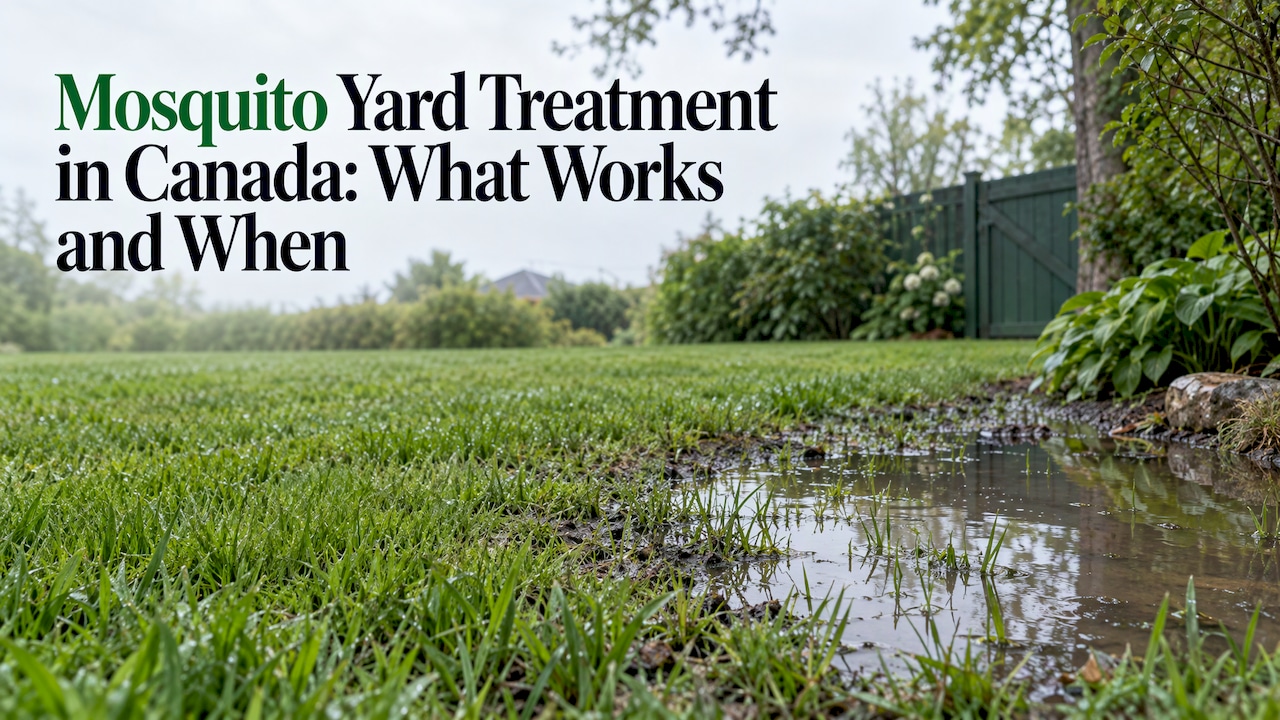
The most effective mosquito yard treatment combines two things: removing the water where mosquitoes breed, and a professional treatment plan that covers the parts of your property you can’t fix yourself. Health Canada’s own guidance starts with standing water, and Manitoba Health says direct mosquito control is complex and best left to trained professionals. Our mosquito control service is built for exactly that second part, with certified technicians and attention to household and pet safety.
TL;DR
-
Mosquitoes breed in still or very slow-moving water, and even small puddles count, so a yard treatment starts with finding every spot that holds water.
-
Larvicide belongs in water, not on your lawn, and it needs reapplying about weekly or when a new generation hatches.
-
Backyard-only efforts may not cut bites if mosquitoes arrive from neighbouring properties, which is why a professional plan matters.
-
Keep people and pets away during any treatment until it has fully dried, and follow the label, which is a legal document.
-
Our certified technicians can handle the treatment for you. Request a quote by phone or online.
Table of Contents
Where mosquitoes come from in your yard
Every mosquito starts in water. Health Canada says they breed in still or very slow-moving water, and even a small puddle can be a breeding site. In a typical Canadian yard that means:
-
clogged eavestroughs and downspout elbows
-
rain barrels without tight screens
-
flowerpot saucers, buckets, tarps and kids’ toys that collect rain
-
low spots in the lawn where puddles last for days
-
bird baths and pet dishes
-
old tires, wheelbarrows and boat covers
Health Canada advises refreshing bird-bath and pet-dish water at least twice a week, and keeping gutters and window screens in good repair. Start there. It costs nothing and it removes the source.
The nuisance species around many homes, such as the northern house mosquito, thrive in exactly this kind of small, stagnant water. Our mosquito field guide helps you tell what you are dealing with.
What a mosquito lawn spray does, and what it doesn’t
People search for “mosquito lawn spray” expecting one product that clears the grass. The reality is more specific.
Larvicides target the water
Health Canada identifies Bti and Bacillus sphaericus products as larvicides that kill larvae, while (S)-methoprene and novaluron stop larvae developing into adults. These are used in water that cannot be drained or changed. Manitoba’s homeowner factsheet says larvicide belongs in eligible water, not on lawns or gardens, and needs reapplication about once a week or whenever a new generation hatches.
Adult treatments are for trained applicators
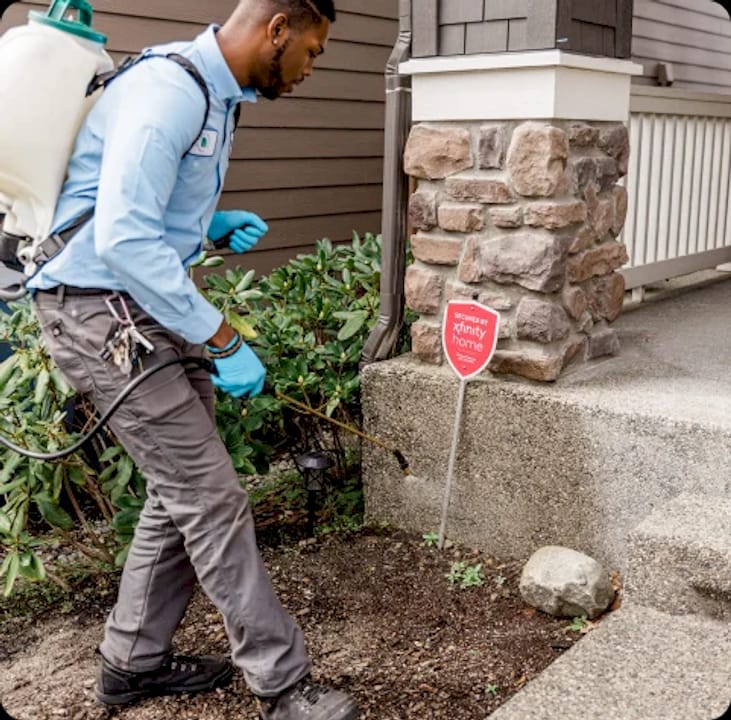
The same factsheet says adulticide application should be left to trained and licensed professionals, and that small-scale efforts may not reduce bites if mosquitoes drift in from neighbouring yards. A treatment aimed at adults has to be matched to the species, the vegetation where adults rest, the weather and the product label. That is a technician’s job, not a weekend one.
Gadgets and fogging
Health Canada says bug zappers and high-frequency electronic repellers are not effective at reducing mosquito populations. Domestic-class pyrethrin products for handheld and total-release foggers were also cancelled in a March 2, 2023 decision, so a fogger from an old garage shelf is not the answer.
A simple routine for the season
-
Walk the yard after a rain. Look for anything holding water for more than a few days.
-
Empty, flip or drain. Tip out containers, store them upside down, regrade low spots.
-
Maintain gutters and screens. Clear debris and mend holes in window and door screens.
-
Refresh water features. Change bird-bath and pet-dish water at least twice weekly.
-
Treat water that can’t be emptied. Only with a registered larvicide, used exactly as the label directs.
-
Protect people. Health Canada recommends approved repellent, covering clothing and netting as appropriate; BC’s CDC guidance also stresses removing habitat and protecting against bites.
Steps one to four are yours. Steps five and the broader property treatment are where a trained technician saves you the label reading, the timing and the repeat visits.
Safety for kids, pets and pollinators
Families ask this first, and the rules are clear.
-
Health Canada’s safe-use guidance says people and pets should leave the area during treatment and return only after the product has fully dried, subject to the label.
-
For pets, remove toys, bowls and bedding before treatment. Granular lawn products may require keeping pets off for 24 hours or longer, and the label governs.
-
Manitoba’s factsheet says do not spray outdoors if wind exceeds 8 km/h, the temperature is above 30°C, or it is raining.
-
Health Canada notes the label is a legal document, and provincial or local rules can add requirements.
Recent label changes also matter. Health Canada’s July 26, 2024 notice on piperonyl butoxide products added limits on mosquito-control application rates and frequency, and environmental precautions for bees and aquatic organisms. Certified technicians work to current labels so you don’t have to track them.
Know your provincial rules
Rules differ by province. Ontario’s home-lawn pesticide guidance restricts cosmetic use on lawns and gardens but allows some pesticides for health or safety purposes, including protection from mosquitoes. In Alberta, Schedule 3 products are for householders around their own homes, but a service applying them must use a certified applicator or work under certified supervision. Alberta’s Environmental Code of Practice, effective February 1, 2025, also covers mosquito control. Saskatchewan’s regulations let people apply pesticides on land they own or rent without a service licence, with general applicator rules still applying.
The practical point: a certified technician already works inside these rules for your province.
When the season starts and ends
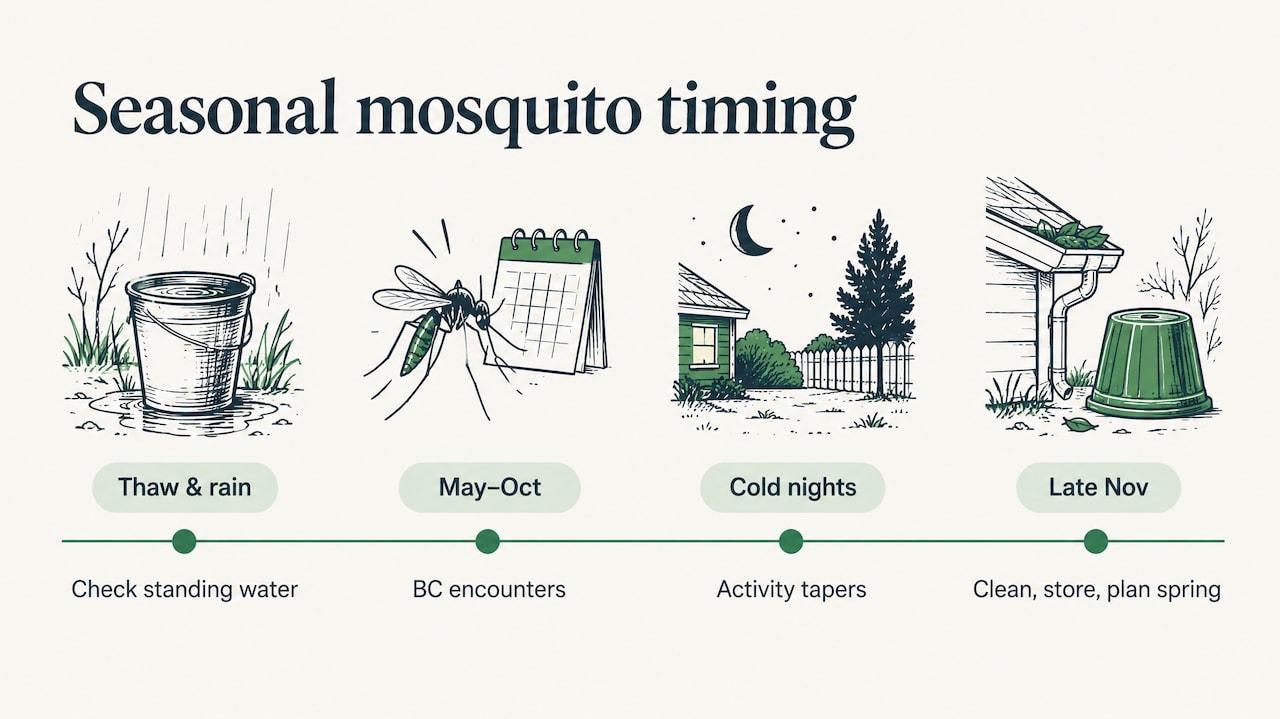
Do mosquitoes go away in October? It depends on where you live. The BC CDC says mosquitoes are generally encountered in BC from May through October, and the window shifts with regional climate. Plan treatment around the local season: standing-water checks begin at the first thaw and rains, and activity tapers as nights turn consistently cold. In late November, when this was written, it is a good time to clean gutters, store containers upside down and plan next spring’s protection.
What about home remedies?
Vinegar and dish soap come up often in searches. Neither appears in Health Canada’s mosquito guidance as a yard treatment, so we would not rely on them. If you want a registered product, Health Canada’s garlic juice decision of May 15, 2014 registered Mosquito Barrier as an outdoor area repellent, applied as a 3 to 6% diluted broadcast spray, which may reduce nuisance mosquito levels when used as directed.
Why a professional treatment makes sense
The pieces above add up to a clear picture. Mosquito control needs the right product, in the right place, at the right interval, in weather that allows it, under your province’s rules and with your family and pets protected. Neighbouring yards can undo a small-scale effort. Trained applicators aim to use only the necessary amount and limit exposure to non-target animals, as Manitoba Health describes.
That is the work we do. Our technicians are certified, trained in responsible product use, and our company holds QualityPro accreditation, which reflects our hiring practices, technician training and commitment to safety.
What we offer
Our mosquito control service is part of residential pest control that includes property inspections, interior and exterior treatments, and unlimited follow-up service calls. If you want protection across the seasons, our Quarterly Protection plan brings preventive visits every quarter. Prices are not published, so you request a quote by phone or online. You can also see the places we serve across Canada.
We also treat wasps, ticks, spiders and rodents, so one provider can cover the whole yard and home. See all our services.
FAQ
What is the best mosquito treatment for a backyard?
Start by removing standing water, then use a registered larvicide only in water that can’t be drained, following the label. For the wider property, a certified technician can plan treatment around your yard, the weather and provincial rules.
How often does mosquito treatment need to be repeated?
Manitoba Health says larvicide needs reapplication about once a week or whenever a new generation hatches. A seasonal plan with scheduled visits keeps that timing off your to-do list.
Is mosquito treatment safe for pets and children?
When applied per the label, yes: people and pets leave the area during treatment and return once the product has fully dried. Remove pet toys, bowls and bedding first, and keep pets off granular lawn products for 24 hours or longer if the label says so.
Why do I still have mosquitoes after cleaning up my yard?
Mosquitoes can arrive from neighbouring properties, so small-scale efforts may not reduce bites on their own. A professional treatment looks at the whole property, including resting areas and water you can’t easily reach.