
Crack and Crevice Treatment: How It Works and Why It's Safer
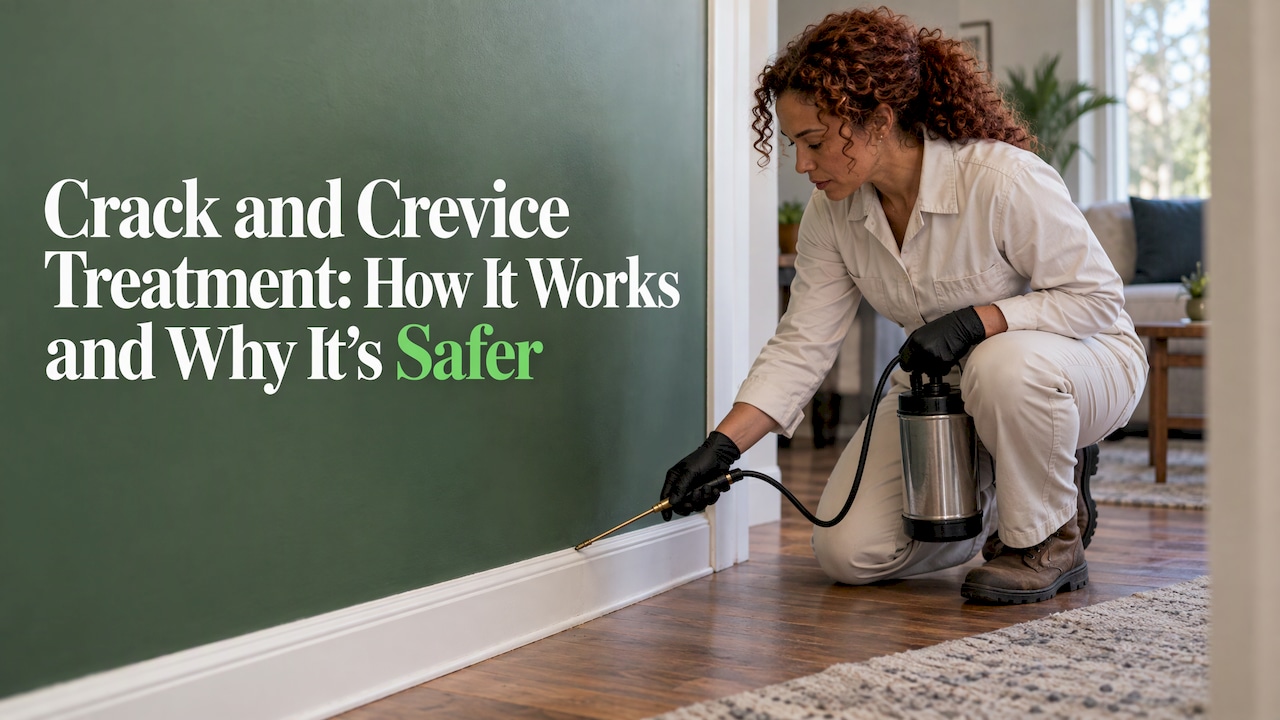
Crack and crevice treatment places a small amount of insecticide directly into the narrow openings where pests hide, travel or enter, instead of covering floors, walls or countertops. It suits family homes because very little product ends up on surfaces you touch. It is also precise work, and it goes best in the hands of a trained technician. Our technicians at Insight Pest Solutions Canada include foundation and crack-and-crevice treatments in residential service, and you can request a quote for pest control by phone or online.
TL;DR
-
Crack and crevice treatment is an application made directly into narrow openings in a structure, such as expansion joints, utility entry points and the gaps along baseboards and mouldings, rather than onto exposed surfaces.
-
Because the product goes where pests live and travel, only minimal residue stays on the surface, which is why it is a preferred approach for homes with children and pets.
-
In Canada, labels for structural pest control products set the rules: follow them exactly, keep people and pets out during application, and allow re-entry only once sprays have dried.
-
It works best alongside sealing, sanitation and inspection, and a professional visit is the sensible route for persistent problems.
-
Preventing pests from using cracks in the first place is part of the same job: inspect, seal, and keep up seasonal protection.
Table of Contents
What crack and crevice treatment actually is
Health Canada’s Pest Management Regulatory Agency (PMRA) is the federal body that registers pesticides in Canada. Its guidance on structural pest control products defines a crack and crevice application as one made directly into narrow openings on the surface of a structure, not a treatment of exposed surfaces. The typical openings are expansion joints, utility entry points and the gaps along baseboards and mouldings.
That guidance sorts structural applications into types: broadcast (an even coverage of a surface), perimeter, spot, void and crack and crevice. Structural products are the ones used against invertebrate pests inside a structure, on its exterior and within a 1 m perimeter around it. Crack and crevice is the most targeted of these types.
US regulators describe it the same way. The Maryland Department of Agriculture’s guidance on integrated pest management for structures says the product stream should be visible and released only inside the crack, leaving no deposit on exposed surfaces. The EPA’s test guidelines add that these openings can lead to voids such as hollow walls, equipment bases, conduits and junction boxes. Pests use those hidden spaces as highways and shelters, which is why a treatment that reaches them does more than one that coats the visible floor.
How the treatment is done
The method matches the tool to the product. According to PestControlBasics, liquids go in through a pin-stream nozzle, pressurized sprays through an injection tube, and dusts through a bulb duster. In each case the goal is a small amount placed accurately.
A typical visit follows a logical order:
-
Inspection. The technician looks for where pests are active and where they get in: gaps around pipes, the foundation line, door frames, window trim, behind appliances.
-
Identification. The pest decides the product and the places. Ants follow trails to different spots than spiders or rodents do.
-
Targeted placement. Product goes into the cracks, crevices and voids that the inspection flagged, not across whole rooms.
-
Exterior and foundation work. Entry points outside the home are treated so pests are stopped before they reach the interior.
-
Follow-up. Pest activity is checked afterwards and adjusted if needed.
The skill is in steps 1 and 2. A crack treated in the wrong place does nothing, and a product put in the wrong opening can end up where it should not be. Our approach pairs the inspection with pest identification, then interior and exterior treatments including foundation and crack-and-crevice work, so the product placement follows what the technician actually finds.
Why families choose it
The main appeal is exposure. Broad spraying leaves product on surfaces that hands, paws and toys touch. Crack and crevice work is aimed into the structure, away from the places a child plays. Maryland’s guidance goes further and recommends that liquid, aerosol or dust formulations be applied only this way, choosing the formulation with the least potential for human exposure.
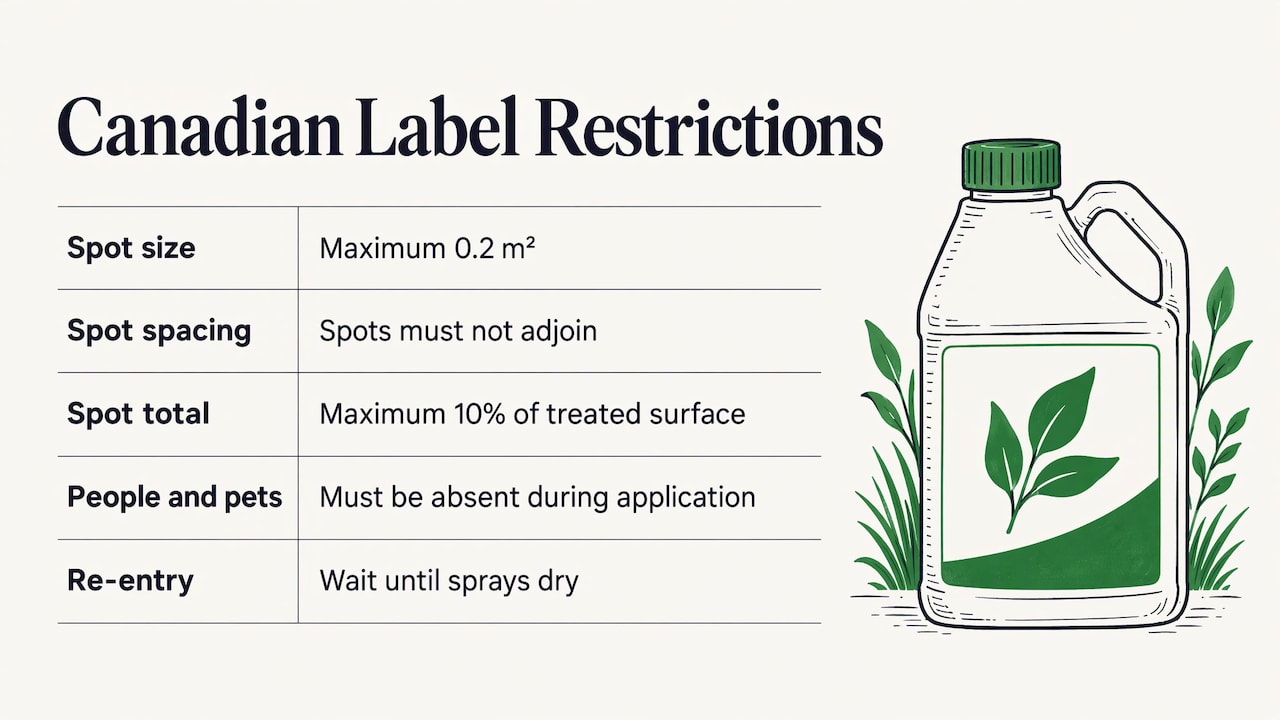
Canadian rules point the same direction. After its re-evaluation, Health Canada restricted indoor residential use of permethrin to perimeter, spot or crack-and-crevice applications only. It also requires that people and pets are not present during application, that re-entry waits until sprays have dried, and that treated areas are ventilated afterwards. When a regulator narrows indoor use to the most targeted application types, it tells you where the safest practice sits.
Precision helps with performance too. Purdue Extension says carefully applied crack-and-crevice treatments are among the most effective techniques against bed bugs, and the same logic holds for pests that shelter in tight gaps: ants, spiders, cockroaches and silverfish all live close to cracks and voids.
Which pests it suits
Crack and crevice treatment is a good fit for pests that hide in or pass through structural gaps:
-
Ants, which trail along baseboards and foundation joints. See our ant control service.
-
Spiders, which settle in corners, window frames and under eaves. Our spider control service covers web removal as well.
-
Beetles, including those that nest in wall voids and trim. See beetle control.
-
Wasps, where nests sit in wall gaps and soffits. Our wasp control includes nest removal.
-
Mice and rats, where entry points need attention alongside treatment. See rodent control.
It is one tool among several. Mosquitoes and ticks live mostly outdoors and call for exterior approaches. Pests deeply embedded in belongings, such as clothes moths in stored textiles, are a treatment-plan question rather than a crack question, which is why identification comes first. A pest-by-pest plan from a technician lets each problem get the method that fits it. Our general pest control service is built around that.
What Canadian labels and rules say
In Canada, the label is the law. A registered product may only be used as its label directs. Health Canada’s guidance on using pesticides safely says a product must be used only for the purpose on its label and must not be mixed with other pesticides unless the label directs it.
Labels are specific. One registered domestic insect product, for example, permits only spot, perimeter or crack-and-crevice applications and no broadcast. It caps each spot at 0.2 m², requires spots not to adjoin, and limits total spot area to 10% of the treated surface. It also describes crack-and-crevice openings as occurring at expansion joints, utility entry points and between construction elements like baseboards and moulding. Those details show how much of this work is about measured, bounded placement.
The rules also keep moving. Health Canada’s June 2026 decision RD2026-14 registered two etofenprox products for structures, including crack-and-crevice treatment, with label statements that bar application when people or pets are present, bar re-entry until sprays dry, and require ventilation indoors. Outdoors, Health Canada’s propoxur changes allow crack-and-crevice use outside, including structural and stinging insect nest treatments, with pin-stream nozzles for aerosols.
For a homeowner, keeping up with product registrations, label restrictions and re-evaluations is a lot to track. Certified technicians work from the current label for every product they use, and that is part of what the QualityPro Accreditation behind Insight reflects: careful hiring, technician training and a commitment to safety.
Before, during and after a treatment
Health Canada’s advice on using pesticides safely gives a clear routine for any indoor application. It applies to your household whether or not you are present for the whole visit.
Before
-
Cover or remove food, dishes, utensils and aquariums.
-
Plan for people and pets to be out of the area during the application. Health Canada singles out children, pregnant women and older people as groups who should leave.
-
Clear the baseboards and the areas the technician will need to reach, such as under sinks and behind appliances, and tell the technician about any pets, birds or fish and anyone with health concerns.
During
-
Keep people and pets out while the application is under way. The PMRA’s standard label statements say not to apply when people or pets are present.
-
Make sure the area is ventilated where the label requires it.
After
-
Do not re-enter until sprays have dried or dusts have settled, which is the PMRA’s standard statement. Health Canada’s general guidance says to stay out of a treated area for at least 12 hours unless the label gives a longer time. Follow whichever your technician and the label specify.
-
Wash food-contact surfaces with hot soapy water once everything is dry.
-
Open windows and let air circulate.
If someone in the home is pregnant, has a respiratory condition, or you have questions about a specific health situation, mention it when booking and talk to your doctor too. If a product is swallowed or someone feels unwell after exposure, call a poison control centre or your doctor right away.
When a targeted treatment is enough, and when it needs more
A crack and crevice treatment deals with pests in the gaps. It works best as part of a wider plan. UC Riverside’s environmental health and safety guidance pairs crack-and-crevice application with sanitation and exclusion, meaning clean-up and closing entry points, and reserves professional pest control for persistent infestations. Purdue Extension likewise notes that in many cases a certified professional’s careful application is necessary, with the best programs combining targeted applications with non-chemical measures.
Signs that point to a professional visit:
-
Pests return within days or weeks of your own efforts.
-
You see activity in several rooms, or in wall voids you cannot reach.
-
You have mice, wasp nests or beetles in the structure itself.
-
A child, pet or health condition in the home makes careful product choice and placement important.
-
You want the exterior and foundation treated, not just the visible interior.
Urgent situations, such as a wasp nest by the front door or rodents in the kitchen, are exactly where a quick, accurate visit beats trial and error.
Keeping pests out of cracks in the first place
Treatment kills what is there. Sealing keeps the next wave out. The US Centers for Disease Control’s guidance on sealing up against rodents notes that a mouse can fit through a hole the width of a pencil, about 6 mm. It lists the usual entry points:
-
Gaps around windows and doors, especially those without weather stripping
-
The line between the foundation and the ground
-
Attic and crawl-space vents
-
Openings where electrical, plumbing, cable and gas lines enter
-
The roof edge, including eaves and soffits
The same guidance recommends steel wool with caulk or spray foam for small holes, along with sealed food and garbage and a tidy yard. These are good habits for any home, and they work best when a technician has first shown you where the real entry points are. During an inspection we look at those same places, so you leave knowing which gaps matter.
Seasonal pressure matters in Canada. Ants, wasps and spiders surge in warm months, while mice and other rodents push indoors as temperatures drop. Our Quarterly Protection plan brings a preventive visit each quarter, so cracks and foundation lines are checked and treated across the seasons rather than after the problem appears. Unlimited follow-up service calls are part of what we offer, so if activity continues, you are not left waiting.
What our service gives you
We provide residential pest control across Canada, with property inspections, pest identification, interior and exterior treatments, foundation and crack-and-crevice treatments, and pest-specific control for ants, spiders, beetles, rodents, mosquitoes, moths, wasps and ticks. Certified technicians customize treatments with attention to household and pet safety, backed by training and responsible product use.
If you are ready to deal with a pest problem or want protection in place before the next season, start with a Quarterly Protection quote or browse the full list of services.

If you are not sure what you are dealing with, our pest field guide helps you identify common pests before you call.
FAQ
Is crack and crevice treatment safe for children and pets?
It is designed to keep product inside the structure rather than on exposed surfaces, which limits exposure. Safety still depends on following the label: keep people and pets out during application and until sprays dry or dusts settle, per the PMRA’s standard statements. Your technician can tell you how long to stay out for the products used in your home.
How long should we stay out of the house afterwards?
Health Canada says to stay out of a treated area until the pesticide has dried, and generally for a minimum of 12 hours unless the label sets a longer time. Ventilate the area when you return and wash food-contact surfaces with hot soapy water.
Is crack and crevice pest control the same as spraying the whole house?
No. A whole-surface application is called broadcast treatment. Crack and crevice treatment places small amounts only in openings such as expansion joints, utility entry points and the gaps along baseboards. Some Canadian labels for indoor residential products allow only this kind of targeted application, along with perimeter and spot treatments.
Which pests does it work on?
It suits pests that shelter in or travel through gaps, such as ants, spiders, cockroaches, silverfish, wasps and bed bugs. Which method applies to your home depends on the pest and where it is active, which is why an inspection and identification come first.
Sources
-
Structural pest control products: label updates (Health Canada, PMRA)
-
Structural pest control using the IPM approach (Maryland Department of Agriculture)
-
Changes to the registration of permethrin pesticides (Health Canada)
-
Registered domestic insect product label (Health Canada Pesticide Label Search)
-
Changes to the registration of propoxur pesticides (Health Canada)
-
Introduction to structural pest management (UC Riverside EHS)