Type to search pests or houses...
Vespula maculifrons
Annual colonies—only the fertilized queen survives the Canadian winter (diapause). The entire colony—workers and males—dies at first hard frost. Every spring, the overwintered queen builds a new colony from scratch, starting with a paper nest the size of a golf ball. Peak population in late summer (2,000-4,000 workers).
Seasonal diet shift explains late-summer aggression. Early summer: Protein (caterpillars, flies, carrion) to feed growing larvae—workers are beneficial predators during this phase. Late summer/fall: As natural food sources decline and larvae mature, adults switch to sugars (fruit, soda, garbage)—this triggers the aggressive scavenging behaviour at picnics and trash cans.
Paper nests in underground cavities (old rodent burrows), wall voids, or attics. Single entrance hole.
Steady traffic of wasps flying in and out of a small ground opening.
Yellowjackets persistently visiting outdoor meals, garbage, or fallen fruit.
Buzzing in walls, wasps emerging indoors suggest hidden nest.
Grey papery structure in protected location (rare to see underground nests).
Moisture stains or soft spots on interior walls may indicate wasps chewing through from a nest inside the wall cavity—they will find alternate routes if blocked.
Common across southern Canada. Multiple Vespula species present.
Active May-October. Most aggressive August-September when colony peaks and natural food declines.
This pest is commonly found in these home types

Extensive soffit length at low height. Attached garages with gaps in weather sealing provide entry.
View house details →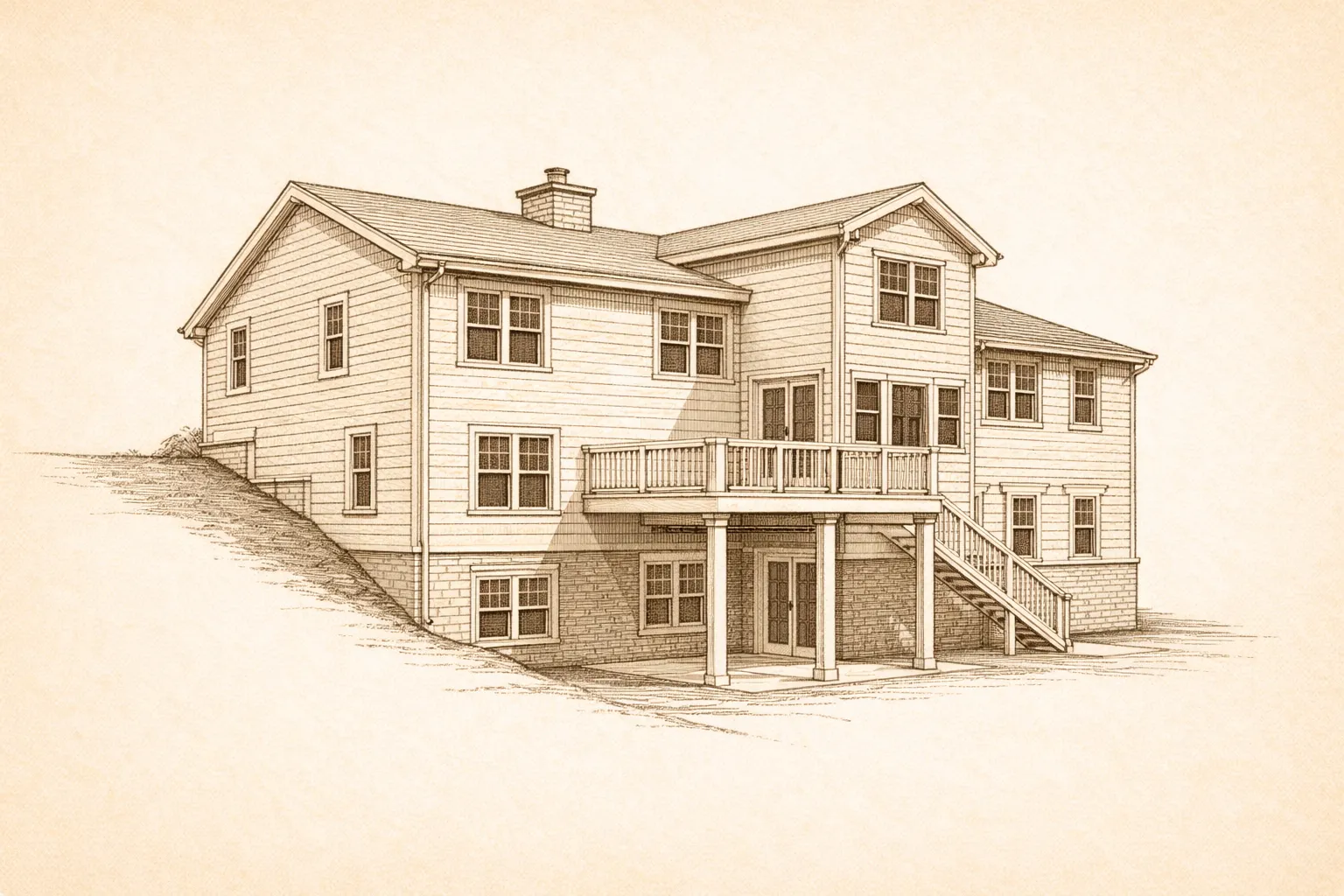
Sloped lots create underground nesting opportunities near foundation. Deck structures provide shelter.
View house details →
Higher soffits are harder to monitor. Attic spaces accessed through damaged fascia boards.
View house details →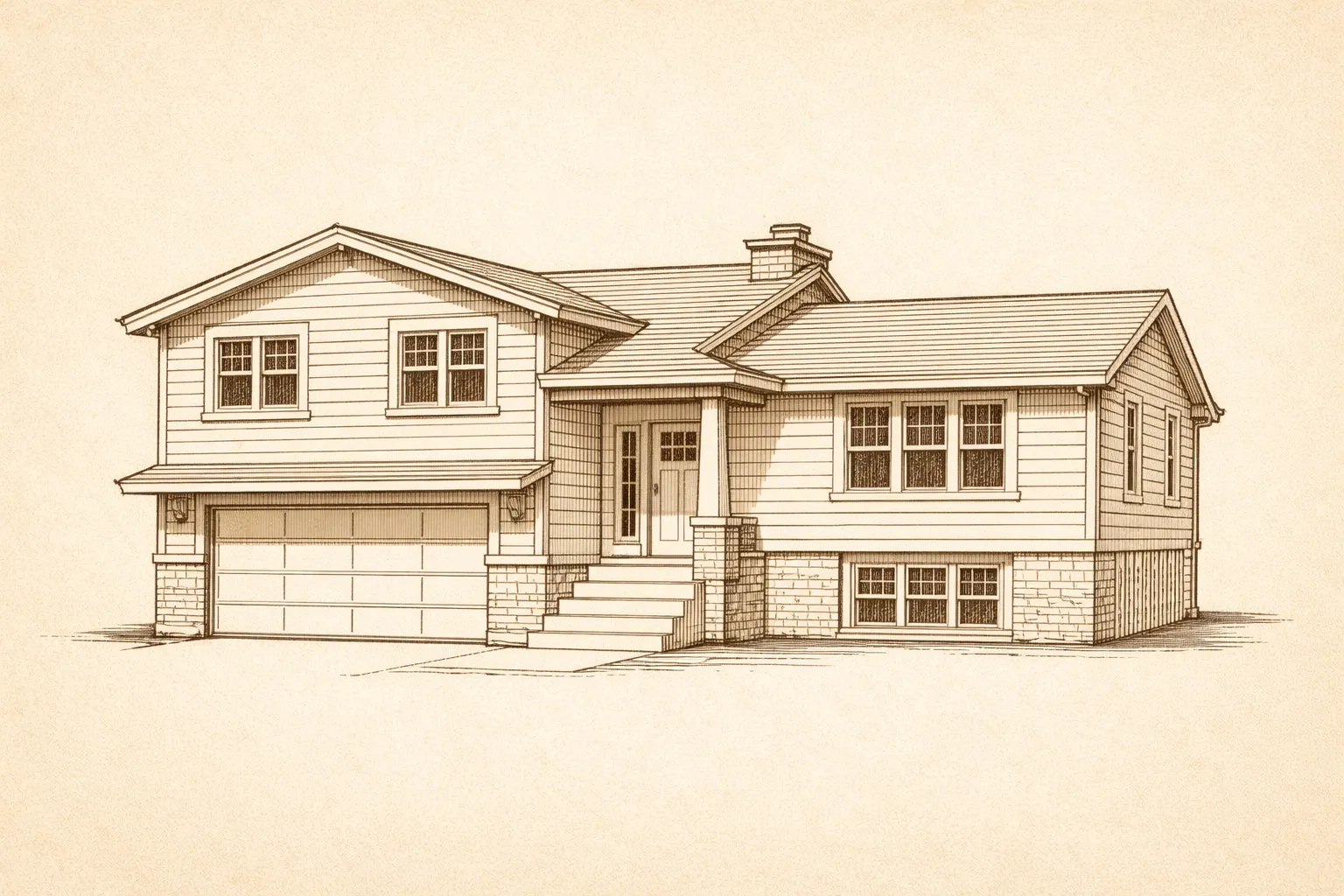
Multiple roof levels with complex soffit intersections create hidden nesting spots.
View house details →Dust or aerosol treatment applied directly to nest entrance at dusk. Do NOT seal entrance before treatment—trapped wasps will find alternate routes, often indoors.
Get Wasp Control Service