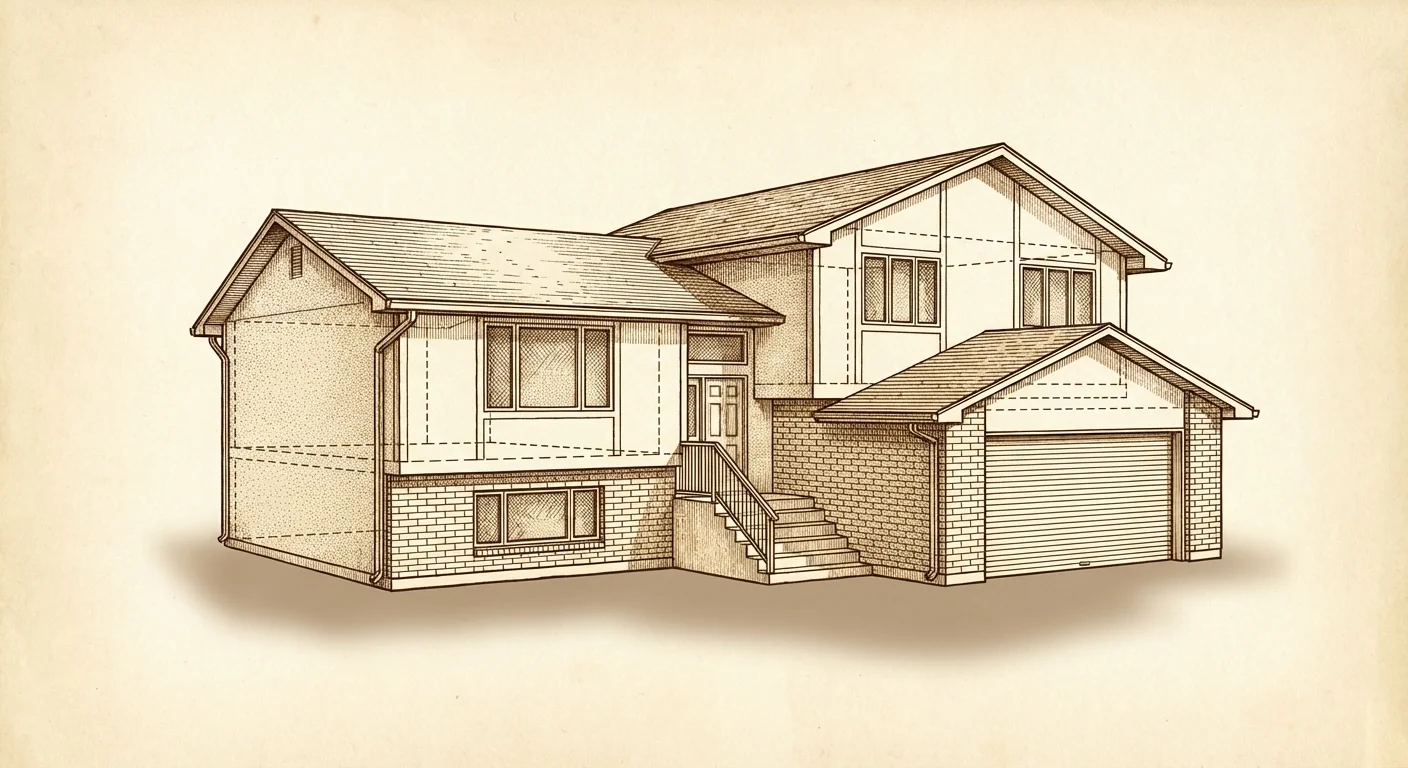
Type to search pests or houses...
Also known as: Post‑war bungalow, Ranch house, Victory Home (1.5‑storey), Wartime house (WHL), Strawberry box
Bungalows reward carpenter ants when the house stays wet: ice‑dam backups soften fascia/roof sheathing, and drainage failures keep the sill and rim joist damp. Delaminated parging can hide protected travel routes from soil to the wood structure, so activity may show up far from the true moisture source.
View pest details →In Canadian bungalows, the garage is often the staging area: road salt degrades the garage door bottom seal, then mice move through unsealed penetrations in the shared wall. Cold‑room vents, legacy pipes, and loose‑fill attic insulation can turn small gaps into long travel corridors.
View pest details →Post‑war lots are heavy on concrete—walkways, porches, driveways, patios. As these crack and parging ages, pavement ants exploit tiny voids, especially behind delaminated parging and at the foundation‑to‑siding transition.
View pest details →Long eaves, soffit vents, and brick weep holes create many sheltered cavities. Once fascia or soffit panels are softened by moisture (or screens are missing), yellowjackets can establish nests that are hard to spot from the ground.
View pest details →In 1.5‑storey Victory Homes, knee‑wall voids and warm roof cavities are classic overwintering sites for cluster flies. They often appear in spring as sunlight warms the roof, then enter living spaces through small gaps at baseboards, outlets, and trim.
View pest details →Basement window wells that collect wet leaves and debris become a sheltered habitat for earwigs. In freeze‑thaw, wells can pull away from the foundation, letting soil and water in—then earwigs and other moisture seekers migrate indoors through the window frame.
View pest details →The foundation‑to‑wood seam (footing → wall → sill plate → rim joist) is where a Canadian bungalow usually leaks first—water, air, and eventually pests. In wartime and early post‑war houses, this area is often a patchwork of original framing, later foundation work, and decades of settling.
Why it fails in older stock: - Some WHL/Victory‑era houses started on temporary supports and were later jacked up to add a basement, leaving a long imperfect seam - Many 1950s builds lack a continuous sill gasket/capillary break, allowing moisture to wick into the sill and rim - Freeze‑thaw and soil movement open micro‑gaps that are hard to see until conditions are wet or cold
What to look for: - Daylight or gaps where concrete meets wood (micro‑gaps are enough for ants and mice) - Dark staining or soft wood at the rim joist/sill plate (moisture first, pests second) - Carpenter ant frass (coarse sawdust mixed with insect parts) - Ant trails emerging from behind parging or between concrete block joints - In localized termite areas: sheltered tubes may be hidden by delaminated parging—consider a specialist inspection
Construction detail: Modern practice adds a true capillary break (sill sealer) and air‑seals the rim joist. The highest‑impact pest prevention here is drainage + drying: keep water away from the foundation and keep the rim joist dry.
Parging is the thin cement coating applied over exposed foundation above grade. On 1940s–70s bungalows it’s common—and in freeze‑thaw climates it often separates from the wall over time.
The hidden void problem: When parging delaminates, it can stay visually intact while creating a narrow vertical cavity behind it. Ants (especially pavement ants) use that cavity like a protected stairwell from soil level up to the sill area or brick weep holes—out of weather and out of sight.
Field test (no special tools): - Tap/sound the parged foundation: solid areas sound sharp; hollow areas sound drum‑like - Look for hairline vertical cracks and sections that “lift” when pressed - Watch for ants emerging from the base of the parging instead of obvious cracks
Fix strategy: Remove loose sections, repair underlying cracks if present, and re‑parge with a properly bonded mix. Pair parging repairs with drainage and grading improvements so you don’t trap water against the wall.
Weeping tile (footing drain) is the perimeter drainage at the base of the foundation. In many 1950s–60s bungalows it was clay tile laid in short sections; some homes used bituminous fibre pipe (often called Orangeburg). Both can shift, crush, or fill with silt and roots over decades.
What failure looks like: - Water staining or efflorescence at the wall‑floor joint - Musty basement air or chronic dehumidifier use - A sump pump that runs far more than expected (or no sump because the original drain ran to storm) - Window wells that hold water after rain/snowmelt (often tied into the footing drain)
Why it matters for pests: A wet footing keeps the sill/rim area damp and raises basement humidity—ideal conditions for carpenter ants (wet wood), silverfish/centipedes, and other moisture‑loving species. In localized termite zones, persistent footing moisture also increases risk (termite work requires a specialist).
Best‑impact prevention: Start above grade: extend downspouts, fix grading, keep gutters clean, and stop roof runoff from pouring into the footing zone. If symptoms persist, drainage assessment is worth it before “chasing pests” indoors.
Basement window wells are small systems: well + drain + window frame. In Canadian freeze‑thaw, they often fail by movement rather than just age.
Common pathology: - Saturated soil freezes to the well (adfreeze) and lifts it during frost heave, slowly pulling it away from the foundation - The gap lets soil and meltwater pour in, clogging the drain and leaving the well flooded - Standing water rots the window buck/frame and creates “soft wood” that carpenter ants can exploit
What to look for: - A visible gap between the well and foundation, or staining that shows water is bypassing the seal - Leaves/composted debris at the bottom (earwigs and sowbugs love it) - A well that holds water after rain - Cracked plastic wells/covers in very cold areas; rusted galvanized wells that are losing shape
Fix strategy: Keep wells clean, ensure the drain is open, and use a rigid, well‑fitted cover that still ventilates. If the well is separating, re‑anchor and reseal it before the window frame becomes the weak point.
A defining Canadian bungalow feature—especially in Ontario and Québec—is the cold room (cantina/fruit cellar), often located under the front porch. Its ceiling is the underside of the exterior porch slab, which acts as a massive thermal bridge.
Why it becomes a pest and moisture hotspot: - Warm, moist basement air leaks through a poorly sealed door and condenses/frosts on the cold concrete ceiling - During thaws, that frost melts and “rains” inside the room, feeding mould and humidity - Cold rooms require exterior vents (often two small core vents near grade); weak screens are easy chew‑through entries for mice
What to look for: - Condensation/frost stains on the porch slab ceiling - Rusted, corroded, or chewed vent screens - A hollow‑core interior door (common) with no weatherstripping - Droppings along shelving; heavy spider activity as a humidity clue
Best fixes: Upgrade vent screening to heavy‑gauge 1/4" hardware cloth, keep vents clear, and weatherstrip the door with a proper threshold. The goal is to control air leakage (humidity) and keep the room dry, not to “warm it up.”
Many Canadian bungalows have an attic that’s hard to inspect near the eaves—and it often contains legacy insulation.
Common materials you might encounter: - Sawdust/wood shavings (older/retrofit): organic and moisture‑holding; a leak can create “rotting log” conditions that carpenter ants like - Vermiculite (1940s–80s): pebble‑like and shiny; rodents tunnel easily; treat as potentially asbestos‑containing until tested—avoid disturbing it - UFFI foam (1970s–80s retrofit): mice can chew tunnels; yellow dust at baseboards can be a clue
Why this ties to ice dams: Warm air leaking through attic hatches, light fixtures, and top plates drives snow melt on the roof deck. Water refreezes at cold eaves and backs up under shingles. The first wood to soften is often fascia and roof sheathing—prime carpenter ant entry.
Inspection safety: If you see vermiculite, don’t “dig” for droppings. Visual inspection only, and consider professional asbestos testing before any work.
Bungalows have a long roof edge relative to their floor area, so small failures at eaves add up quickly. In Canadian winters, the soffit/fascia system is also the first casualty of ice dams driven by attic heat loss.
The anatomy: - Fascia board: The vertical board at the roof edge that holds gutters - Soffit: The horizontal surface under the roof overhang - F-channel: The trim piece that holds soffit panels - Drip edge: Metal flashing that directs water into gutters
Bungalow‑specific vulnerabilities: - Low roof pitch and deep snow loads can block airflow at the eaves - Warm air leaks (attic hatch, light fixtures) fuel ice dams; backup water rots fascia and roof sheathing - Rot creates gaps for yellowjackets and carpenter ants (and sometimes wildlife) to access the attic - Missing or damaged vent screens invite insects
What to look for: - Water staining at ceiling edges or in closets below the eaves - Soft fascia wood or sagging gutters - Damaged soffit panels or missing vent screening
Construction detail: Keep soffit vents clear with baffles, air‑seal the attic hatch/top plate penetrations, and keep gutters/downspouts clean so roof water doesn’t feed the ice‑dam cycle.
If your “bungalow” is actually a 1.5‑storey Victory Home, the knee‑wall voids behind upstairs rooms are one of the highest‑value inspection zones.
Why the void is attractive to pests: - Insulation was often placed on the floor of the void (or loosely on the back of the knee wall) with no continuous air barrier - The space becomes a buffered in‑between zone: warmer than outdoors, cooler than living space - Cluster flies and some wasps overwinter here; mice can nest undisturbed close to bedrooms
What to look for: - Gaps at soffits and roof returns, especially around porch roofs and dormers - Springtime cluster‑fly emergence in upper bedrooms - Droppings or nesting in the eaves storage areas
Access + sealing: When possible, air‑seal and insulate the knee wall as a true exterior boundary (rigid foam + sealed seams) and ensure soffit ventilation stays clear with baffles.
The wall between an attached garage and living space is a critical pest barrier—and frequently compromised. In Canada, road salt accelerates the failure of door seals and hardware at the garage threshold.
Where failures start: - A worn garage door bottom seal (and corroded bottom retainer) leaves a continuous floor‑level gap - Door corners and slab edges crack with freeze‑thaw - The shared wall often has unsealed penetrations (gas lines, electrical, central vac, cables)
Why garages amplify pest pressure: - Stored birdseed, pet food, and garbage - Warmth in winter from the house wall - Sheltered space where pests can linger before entering the house
Construction detail: The garage‑house wall should have fire‑rated drywall (5/8" Type X) and a solid‑core door with weatherstripping and a door sweep. Seal penetrations with appropriate materials (often fire‑rated caulk in this assembly).
Post‑war bungalows often have “vestigial” features that are obsolete but still act like open ports in the building envelope.
Milk chutes / milk boxes (1950s): A framed opening with a thin door. Even if it’s latched, it leaks air and can harbour nesting in the wall cavity between inner and outer doors.
Abandoned oil fill pipes: A 2" steel pipe through the foundation wall is a ready‑made tunnel for mice if it’s uncapped or rusted open at either end.
What to do: - Permanently block and insulate the milk chute cavity, then seal the perimeter (metal + foam/caulk) - Cap oil pipes with a threaded metal cap and seal around the penetration; confirm the interior end is also closed - Treat any unused foundation penetration as an entry point until proven otherwise