Type to search pests or houses...
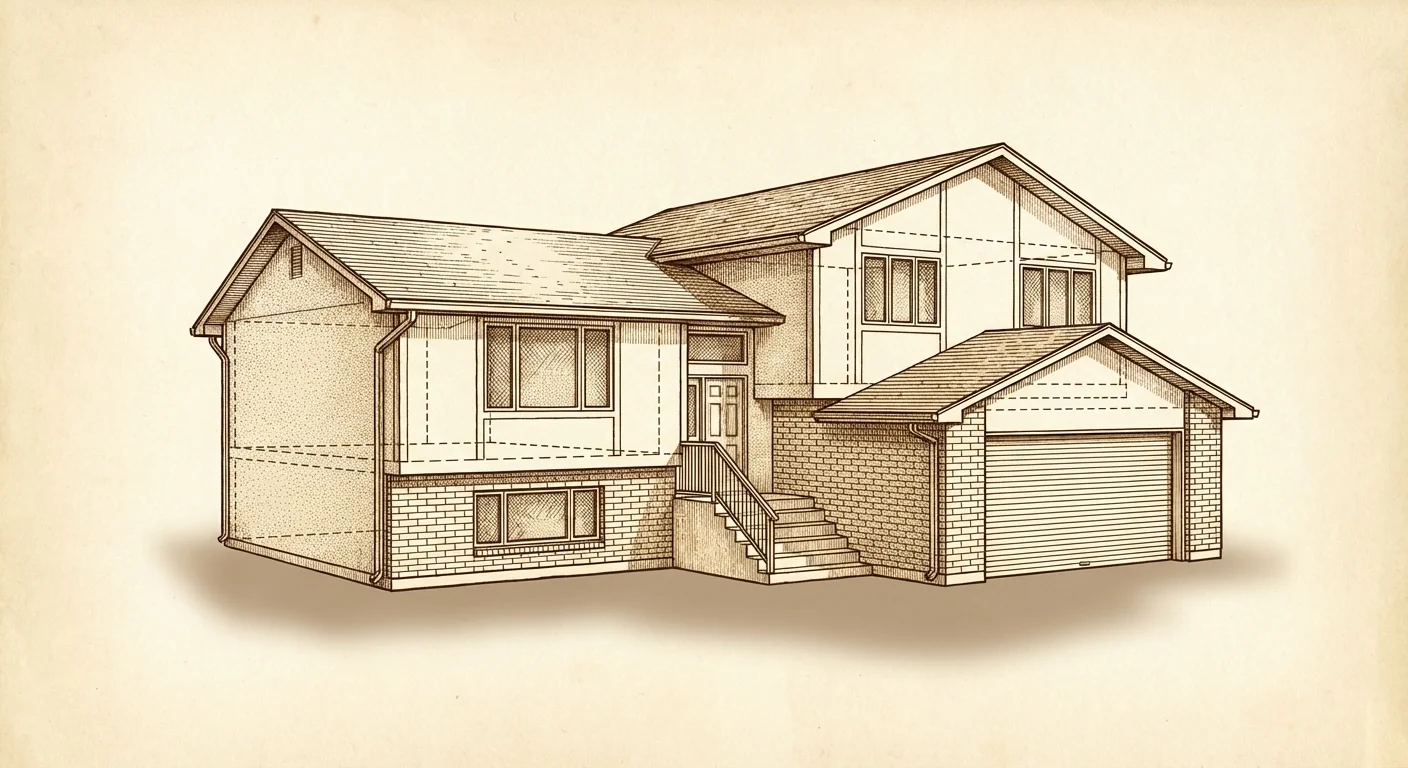
Also known as: Split-entry, Split-foyer, Raised ranch, Raised bungalow
Bi-levels frequently have cantilevered overhangs and a rim-joist band close to grade. Small gaps at the soffit-to-foundation seam can let mice access warm joist bays and move between the basement ceiling and main-floor cavities. An attached garage (common in this type) can also act as a staging area via door gaps and utility penetrations.
View pest details →The rim joist and band area often sit in the snow and splash zone, and older vapour-barrier/insulation details can trap moisture. Persistently damp rim-joist or cantilever bays are prime locations for carpenter ant satellite nests—sometimes noticed as frass along lower-level exterior baseboards.
View pest details →Deep window wells and a raised lower level can create damp micro-zones when drainage clogs. House centipedes often show up where moisture supports their prey (sowbugs, springtails, spiders), so repeated sightings can be a red flag for window-well or foundation moisture issues.
View pest details →Roof overhangs and soffit transitions around split-entry bump-outs create sheltered voids. Small openings at fascia, soffit panels, and corner trims can allow yellowjackets to build nests out of sight until activity peaks in late summer.
View pest details →A true bi-level is defined by its split-entry landing. That “step” in the building mass usually means more seams: changes in foundation height, changes in framing, and multiple rim-joist/sill-plate lines.
Why it matters for pests: - Seasonal soil movement and frost heave can open cracks where the entry section meets the main foundation. - In heavy clay regions, freezing soil can bond to the foundation (“adfreezing”) and contribute to stair-step cracks near lower window corners. - The stack effect pulls air in low and pushes it out high, turning small gaps into scent trails that rodents follow.
What to look for: - Cracks at the foundation step and around lower-level window corners - Gaps at siding-to-foundation transitions near the entry - Unsealed service penetrations, especially between garage and living space
To gain square footage without enlarging the foundation, many bi-levels extend floor joists past the foundation wall (a cantilever). The underside is boxed in with a soffit, creating a sheltered cavity.
Why it matters for pests: - The concrete-to-soffit corner forms a protected “rodent shelf” that guides mice along the perimeter until they find a gap. - Fiberglass batts can sag, leaving warm air pockets that become ideal nesting bays. - Air leakage through the cantilever increases condensation and wood decay, making materials easier to chew and excavate.
Best-practice approach: - Air-seal and insulate the entire cantilever bay (closed-cell spray foam is common when appropriate) - Harden seams with metal flashing or 1/4-inch hardware cloth where gnawing is likely - Keep soffit panels intact and penetrations tight
Because the lower level sits close to grade, bi-levels rely on deep window wells to bring in light. Over time, wells collect leaves and silt; stone can clog and the well can hold water during snowmelt and heavy rain.
Why it matters for pests: - Wet, debris-filled wells support mold and decomposing organics that attract springtails and sowbugs. - When conditions change (flooding, drying, freezing), these pests migrate toward the easiest exit—often the window frame, weep holes, or tiny foundation gaps. - Persistent wetting against the foundation also raises indoor humidity and increases carpenter ant risk.
What helps: - Keep wells clean and filled with washed clear stone (not soil or mulch) - Confirm the bottom of the well drains (to weeping tile or a dedicated drain) - Use fitted covers that keep debris out while allowing the window to function as designed